Word Pairs on the TOEFL ITP: Both ... And, Not Only ... But Also, Neither ... Nor, and More
Word pairs in TOEFL ITP Structure: both ... and, not only ... but also, either ... or, neither ... nor, and more, with right and wrong examples and a quiz.
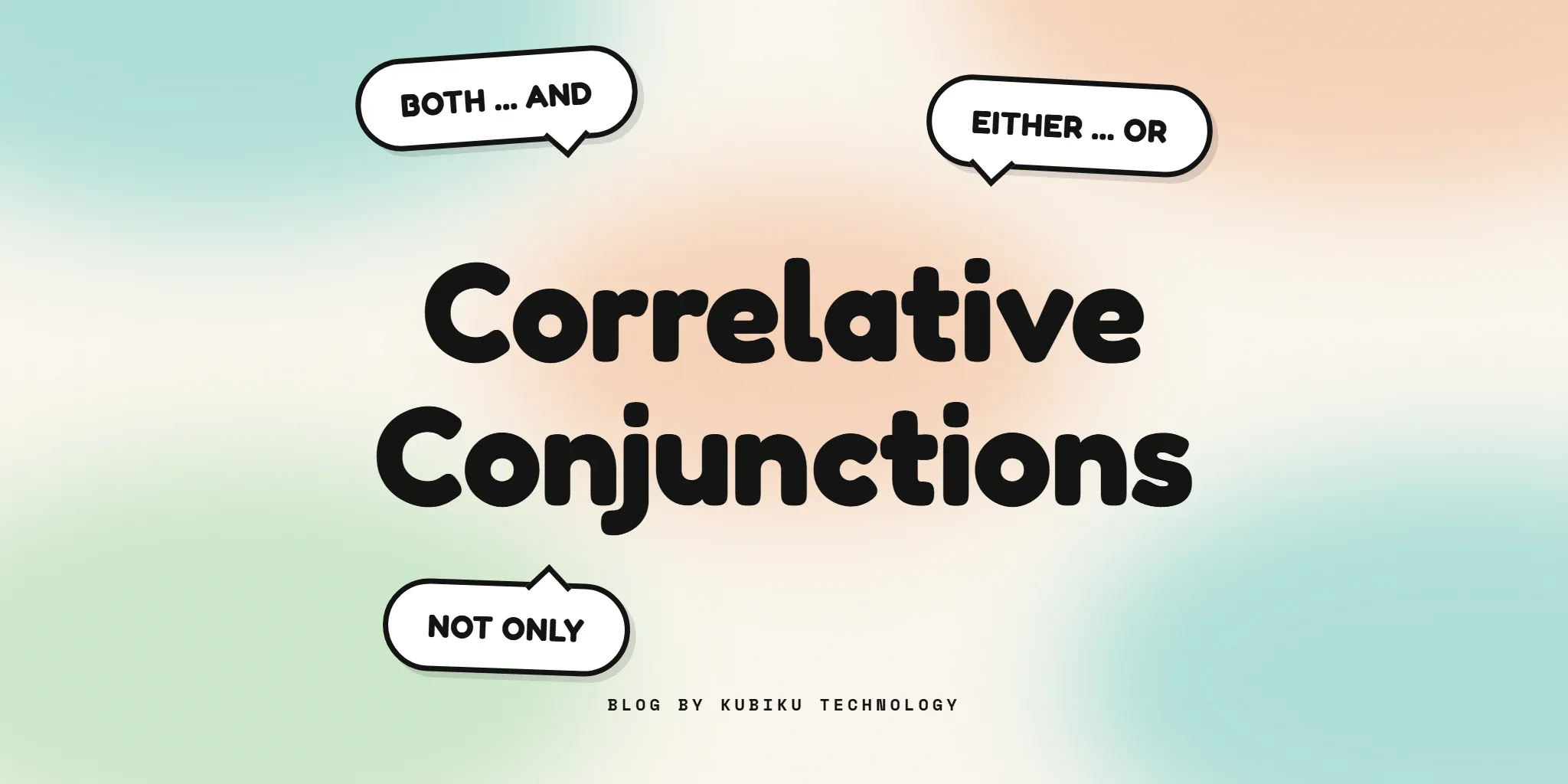
Ever picked an answer in TOEFL® Structure that read smoothly, only to find out it was wrong? You may have fallen for a word pair trap.
English has connectors that always come in pairs, called correlative conjunctions: both … and, not only … but also, either … or, neither … nor. Once the first word appears, its partner is fixed. That makes these questions fast to answer: spot the first word, then look for its partner among the options.
Two preposition pairs follow the same logic and are often tested alongside them: between … and and from … to. Here they all are. (The slides are in Indonesian; the article covers everything in English.)
Why Word Pairs Come Up So Often
Word pair questions are easy to write and easy to grade. The test makers just replace the correct partner with something that means almost the same, like as well as for and, or and also for but also. The sentence is still understandable, so if you go by meaning alone, you get fooled.
In Structure, the blank is usually the second half of the pair. In Written Expression, the wrong partner is usually one of the underlined parts.
Pair 1: Both … And
Both always pairs with and. Not as well as, not along with, not or.
❌ The course is both practical as well as comprehensive. ✅ The course is both practical and comprehensive.
❌ Both the students or the teachers attended. ✅ Both the students and the teachers attended.
A subject joined by both … and is always plural, so the verb is plural too: Both Rina and Dimas are ready.
Pair 2: Not Only … But Also
The standard partner of not only is but also. The usual traps are and also or plain and.
❌ She is not only intelligent and also very creative. ✅ She is not only intelligent but also very creative.
A variation that is still correct: also can move or be replaced, as in not only intelligent but very creative as well. What matters is that but is there. An option without but is almost always wrong.
Also remember: when not only opens the sentence, the clause is inverted.
✅ Not only is she intelligent, but she is also creative.
Pair 3: Neither … Nor and Either … Or
Neither pairs with nor. Either pairs with or. Test makers love to cross them.
❌ Neither the manager or the staff attended the meeting. ✅ Neither the manager nor the staff attended the meeting.
✅ You can pay either by card or in cash.
Memory trick: N goes with N. Neither goes with nor.
Two extra points that are often tested:
- Neither … nor is already negative, so do not add not. ❌ Neither the manager nor the staff did not attend.
- The verb agrees with the closer subject: Neither the manager nor the employees were there.
Pair 4: Between … And
Technically between is a preposition, not a correlative conjunction, but the pattern is the same: when you name two points with between, the connector is and. Not to, not or.
❌ The event was held between 1990 to 2000. ✅ The event was held between 1990 and 2000.
✅ Choose between the red one and the blue one.
Between 1990 to 2000 is common in casual speech, but in standard written English it is still wrong.
Pair 5: From … To
To describe a range from one point to another, the standard partner of from is to.
✅ The museum is open from 9 AM to 5 PM every day. ✅ Prices range from 10 to 50 dollars.
Some study materials claim that from … until is wrong. That is not accurate. For time, from 9 AM until 5 PM is also correct and standard. What you must not do is mix in another pair’s partner:
❌ from 9 AM and 5 PM (and belongs to between) ❌ between 9 AM to 5 PM
For ranges of numbers, prices, or places, use to, not until: from Jakarta to Bandung, not from Jakarta until Bandung.
Trick: See from? Look for to. See between? Look for and. Do not let the partners swap.
Bonus: Word Pairs Must Also Be Parallel
What follows the first word and what follows the second word must share the same form. This is often a second-layer trap.
❌ He likes both swimming and to run. ✅ He likes both swimming and running.
❌ The plan is not only cheap but also it saves time. ✅ The plan is not only cheap but also efficient.
Summary of the Word Pairs
| First word | Correct partner | Common traps |
|---|---|---|
| Both | and | as well as, along with, or |
| Not only | but also | and also, and |
| Neither | nor | or (and never add not) |
| Either | or | nor |
| Between | and | to, or |
| From | to (for time, until is also correct) | and |
Quick Quiz
Complete the sentences:
- The book is both informative ______ entertaining.
- Neither the director ______ the producers commented.
- The store is closed between Christmas ______ New Year.
- The research was not only expensive ______ time-consuming.
Answers:
- and
- nor
- and
- but also
Want to build the foundations? Read Parts of Speech 101 to see how conjunctions differ from prepositions, and the TOEFL ITP Guide for a full overview of the test.
Practice Until It Is Automatic
Word pairs are some of the “cheapest” points in Structure: once you know them, a question can take just a few seconds.
Kawan EPT (formerly Kawan TOEFL) offers Grammar lessons covering 33 topics (Learn, Drill, Master), more than 7,400 questions with explanations for every answer choice, and a Weakness Drill to work on your weak spots. When you are ready, take the full 140-question simulation with a score estimate from 310 to 677. Free on the Google Play Store.